
The Ecology Behind the Napa Valley Wine Region
Soil, climate, and fog: how Napa Valley terroir ends up in your glass.
Napa Valley is world famous for its wine. It stretches from Calistoga in the north down to San Pablo Bay in the south. The Vaca and Mayacamas mountain ranges cradle it to the east and west. Napa is also one of the most diverse growing regions in the world.
To understand Napa Valley terroir, you have to understand its geography, its weather, and its geology. That means the soil’s volcanic origins and the climate ladder that warms as you move south to north. It also means the warm-day/cool-night cycle (and that famous Bay Area fog!). Put together, Napa Valley is a pretty perfect confluence of history and timing.
Napa Valley Terroir Starts With Ancient Volcanoes and Oceans
Believe it or not, the ground under these vines used to be the ocean floor. About 140 million years ago, tectonic plates scraped that ocean floor onto the edge of the continent. Then, somewhere between 9 and 3 million years ago, a long stretch of volcanic activity built the Mayacamas, the Vaca Mountains, and Howell Mountain. It did it all with ash and lava. That volcanic rock is still up there today, shaping every hillside vineyard in the valley.
By contrast, the valley floor has a gentler backstory. Streams spent hundreds of thousands of years washing gravel, clay, and loam down off those same mountains. Over time, that built the soft alluvial fans that Rutherford and Oakville now sit on. That split of volcanic rock on the hills and alluvial soil on the floor actually changes how a vine grows, and it’s the foundation of Napa Valley terroir. Thin, rocky hillside soil stresses the vine into smaller, thicker-skinned berries and firmer tannin. Richer valley-floor soil gives the vine more to work with, so the wine comes out softer and more approachable earlier.
The most famous patch of that valley-floor soil is the Rutherford Bench. Its fine, dusty loam earned the nickname “Rutherford Dust.” That name came from legendary Napa winemaker André Tchelistcheff, who was fond of saying that great California Cabernet starts right there.
One Valley, Multiple Climates
That single opening to San Pablo Bay at the south end of the valley sets up something viticulturists call a temperature ladder. For example, Los Carneros, right on the bay, stays cool and foggy most mornings, rarely climbing past 80°F. Meanwhile, Calistoga, tucked away at the sheltered north end, regularly hits 100°F.
There’s actually a scale for this, called the Winkler Index, that measures how much heat a region racks up over a growing season. Most wine regions sit in just one part of that scale. But Napa spans almost the whole thing in one 30-mile stretch. That’s exactly why it can grow bright, cool-climate Chardonnay in the south and big, sun-soaked Cabernet twenty miles north.
Elevation also throws in one more variable. Napa’s mountain districts, such as Howell Mountain, Atlas Peak, and Spring Mountain, sit up above the nightly fog. As a result, they actually get more sun even though their days run cooler. And sometimes the local geography just does its own thing. Stags Leap District’s hills are shaped almost like an amphitheater, funneling San Pablo Bay’s afternoon breeze straight onto its vineyards. It can be ten degrees cooler there than a spot just across the river.
Warm Days Into Cooler Nights
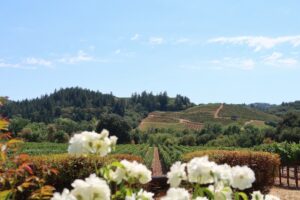
Here’s the mechanism that ties Napa Valley terroir together and actually ends up in your glass: the swing between a day’s high temperature and that night’s low. Warm days build sugar and tannin. But cold nights slow the vine down and lock in acidity. Calistoga is the poster child for this, with 100°F afternoons followed by nights that dip near 50°F, the biggest swing in the valley.
It’s also what sets Napa apart from another famous wine region, Bordeaux, in France. Bordeaux’s cooler, more unpredictable weather often leaves tannins a little underripe, which is part of why Merlot is so essential there, to soften things out. Napa’s heat is more dependable, so Cabernet gets to ripen fully on its own. That’s how you end up with the firm, resolved tannins and riper fruit that Napa Cabernet is known for. The Napa Valley Vintners describe the same pattern of warm, sunny days and cool evenings.
The Theory, Planted In Our Own Vineyards

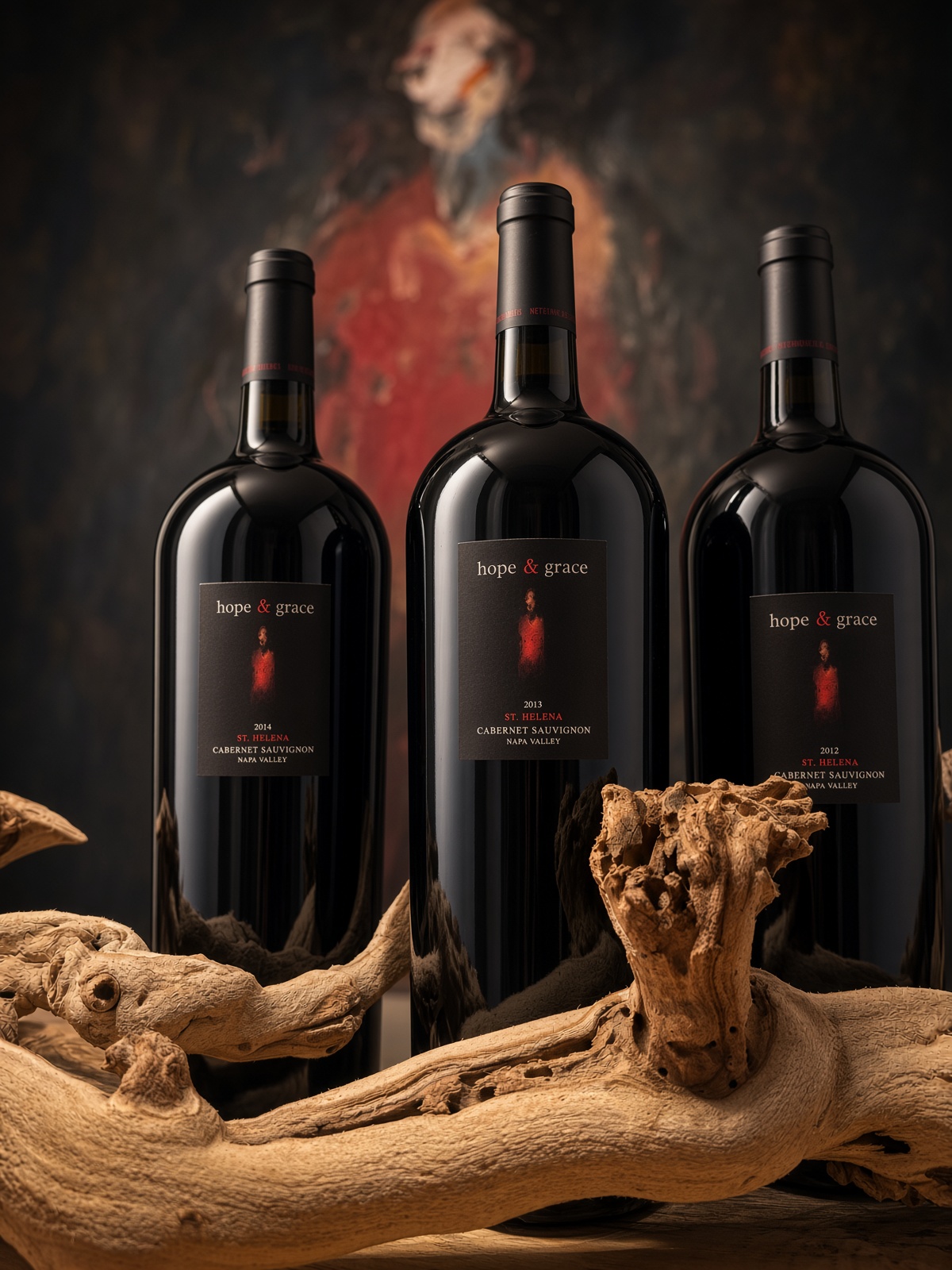
Napa Valley terroir changes every few miles, so different grapes like different homes, and choosing the right vineyard is where it all begins. In the Stags Leap District, stony, seabed-derived soils sit below the volcanic palisades. There, afternoon bay breezes give the vines extra time to develop flavor and soften their tannins. In St. Helena, well-drained loam over ancient cobblestone deposits and long, sunny days create ideal conditions for Cabernet Sauvignon’s slow ripening.
Our Malbec and Riesling thrive in the heavier clay soils of the cooler Oak Knoll District. There, the soil naturally slows the vines even as the sun encourages ripening.
Pinot Noir prefers a cooler, longer growing season than Napa Valley typically offers, so we look beyond the valley. In the Santa Lucia Highlands and Russian River Valley, coastal fog and cooler temperatures create a slower, gentler ripening season. That allows Pinot Noir to develop its distinctive character and complexity.
Where hope & grace Sits In All This
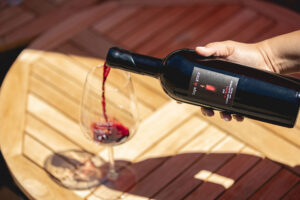
Napa Valley terroir isn’t some mysterious quality. It’s a handful of things you can actually measure: volcanic versus alluvial soil, distance from the bay, and elevation above or below the fog line, recombined a little differently at every turn of the valley.
In Yountville, we sit right in the middle of it, on the valley floor. We’re between the cooler air of Oak Knoll District to the south and the warmer Rutherford Bench to the north. We’re close enough to the bay for those acid-preserving cool nights, yet far enough away to ripen Cabernet all the way. It’s the same volcanic history and single-corridor climate that built Napa’s whole reputation, just showing up here at this one spot along the valley.
Book a Tasting Here